
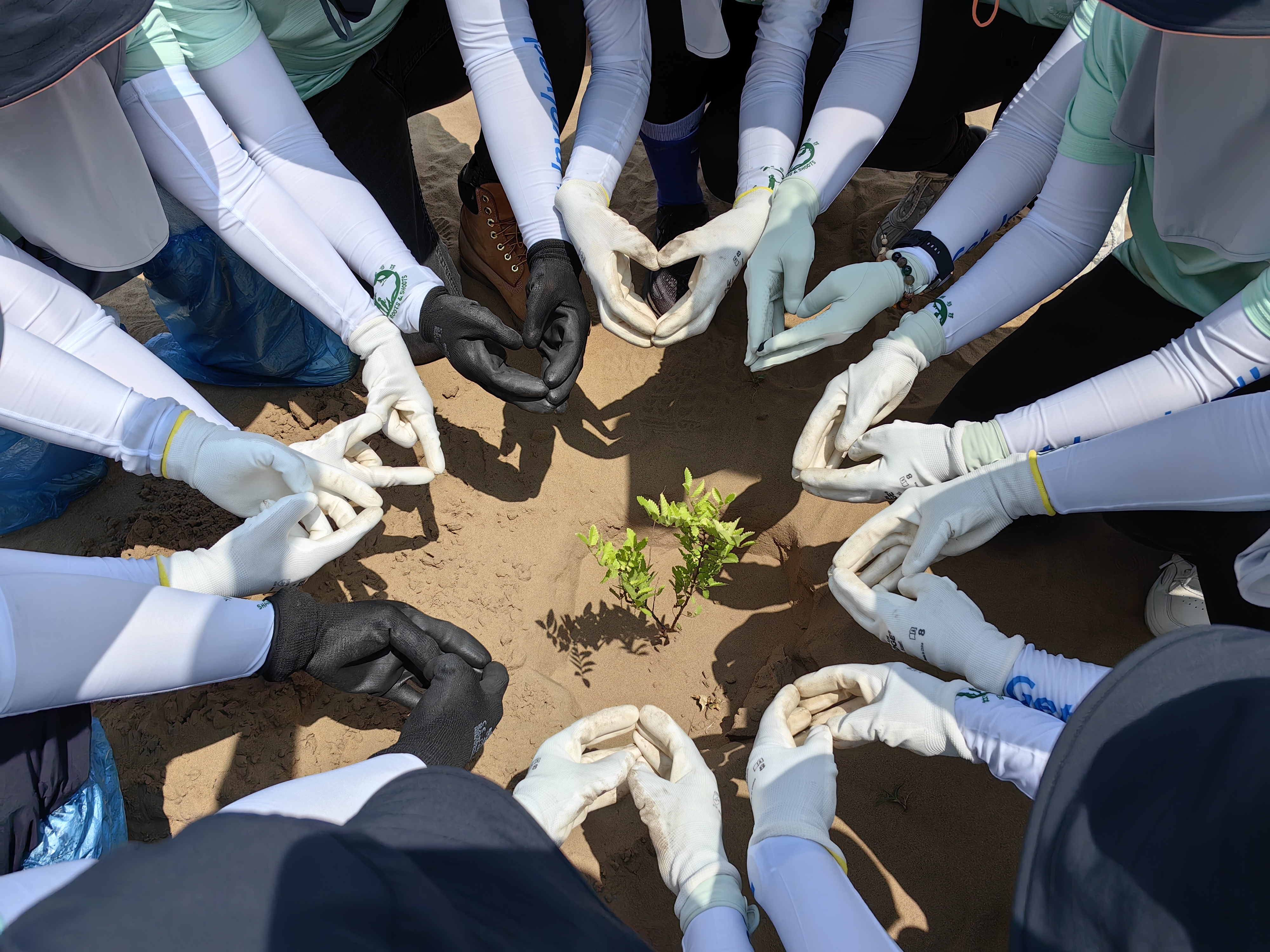
“Only if we understand can we care; Only if we care will we help; Only if we help, shall all be saved.”
——Dr. Jane Goodall
Trip Itinerary
Day 1 Traveling and settling in Inner Mongolia
12:00 Arrive in @Shenyang Taoxian International Airport
13:00-17:00 Take bus to Horqin Zuoyi Houqi
17:00-18:00 Arrive and check-in Bowang Hotel
18:00-20:00 Welcome dinner in Mongolian style at hotel
22:00 Sleep Time
Day 2 Take action to fight climate change
07:00-08:00 Breakfast
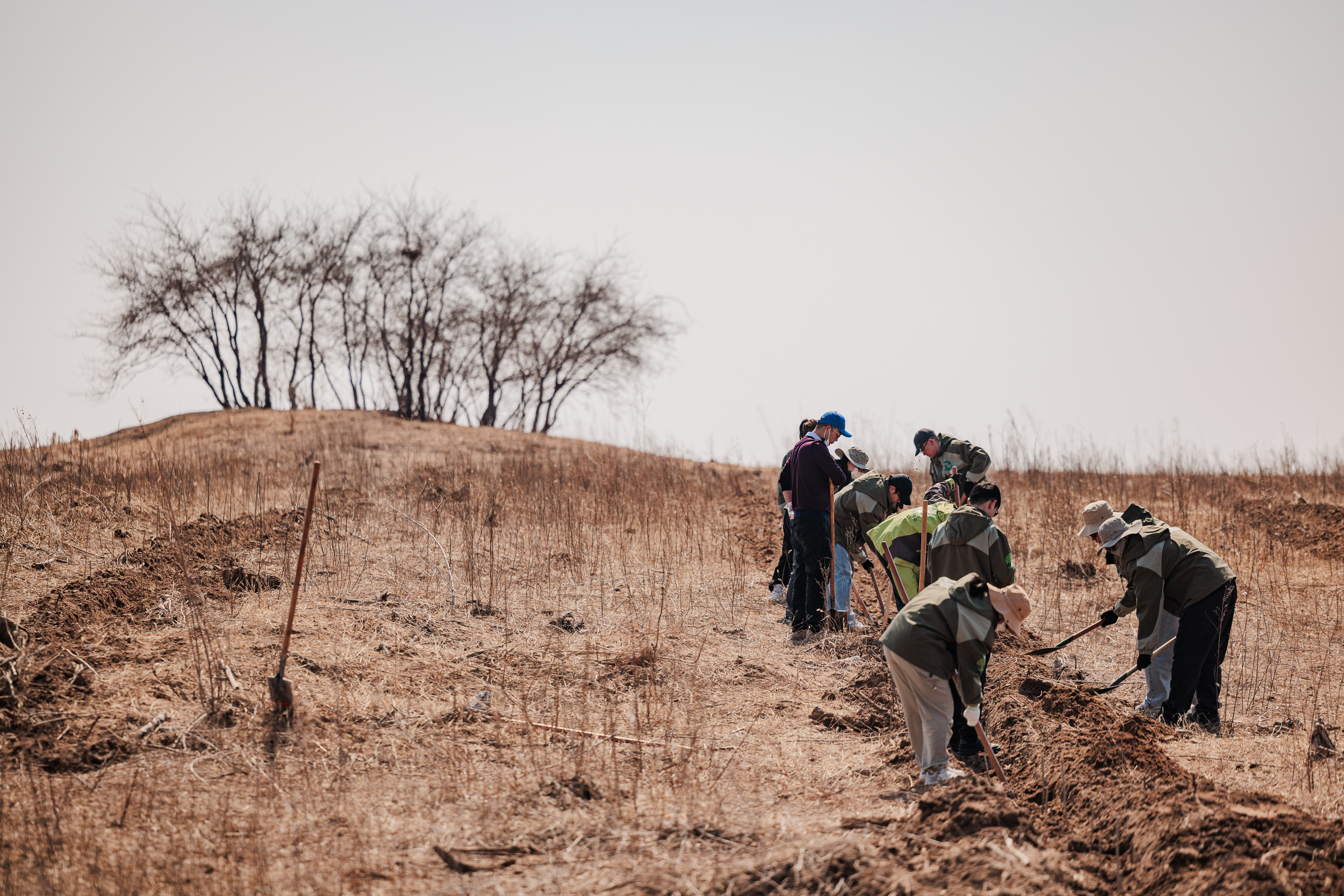
08:00-11:30 Bus ride to tree planting site & Tree planting
11:30-13:30 Lunch break workshop
13:30-16:30 Tree planting
16:30-17:30 Bus ride back to Horqin Zuoyi Houqi
18:00-19:00 Dinner & Group sharing
22:00 Sleep Time
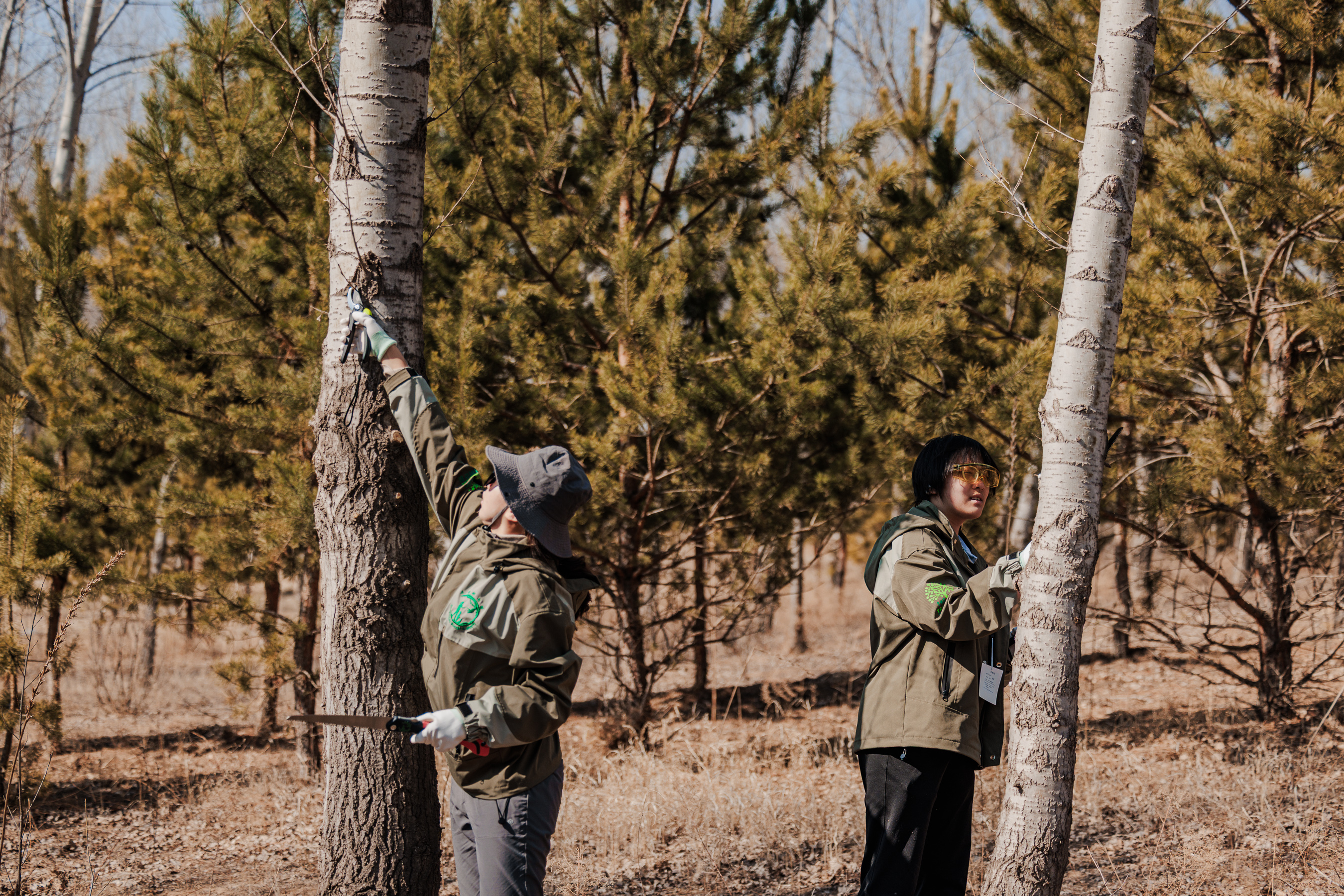
Day 3 Facing the problem and reflect
07:00-08:00 Breakfast
08:00-09:00 Bus ride to desert
09:00-11:00 Visit desert
11:00-13:30 Lunch break and workshop
13:30-14:00 Bus ride to old MTP forest sites from previous years
14:00-16:00 Pruning
16:00-18:00 Bus ride to Horqin Zuoyi Houqi
19:00-20:00 Dinner & Group Sharing
22:00 Sleep Time

Day 4 Review and Sharing
07:00-08:00 Breakfast
08:00-08:30 Check out & Take off
08:30-14:00 Bus ride to Shenyang Taoxian International Airport, lunch break on the way
14:00 Arrive in the airport
Trip Gear Provided By Shanghai Roots & Shoots

MTP Windbreaker

Sports Scarf, Mask and Glove

Tissue and Wet Wipes
Travel-size shampoo, conditioner, shower oil and body lotion
Special thanks to Oji Paper & L’Occitane for sponsoring and supportingthis tree planting trip!
Special Gift Provided by Fiman
We’ve prepared some surprises for our participants. One of the gifts is sponsored by Fiman.
Background Information
Shanghai Roots & Shoots
The roots creep underground everywhere and make a firm foundation. Shoots seem very weak, but to reach the light they can break through brick walls. Hundreds and thousands of roots and shoots, hundreds and thousands of young people around the world, can break through these walls.--- Dr. Jane Goodall
In 1991, Dr. Jane Goodall, a UN Messenger of Peace, primatologist, and British Dame, started Roots & Shoots, a program designed to educate youths about environmental issues and humanitarian values with a special focus on group interaction. Roots & Shoots unites those who hold certain values in common: love for animals, care for the community, and devotion to protecting the environment. The program originated in Tanzania with only 16 students; now Roots & Shoots has expanded to 75 countries with more than 10,000 R&S groups. We believe that the future is in the hands of the world's young people.
The Shanghai Roots & Shoots was founded as a volunteer organization by Ms. Tori Zwisler in November 1999. Five years later, in November of 2004, Roots& Shoots was granted a Non-Profit Organization status by the Shanghai City Government. The Shanghai Roots & Shoots program encourages youths to become advocates for environmental and wildlife protection, as well as poverty all eviation and social initiatives by giving them the tools and support to carry out projects of their own design. The program is committed to the understanding and preservation of wildlife and our living world through the education and empowerment of our youth. It aims to foster respect and compassion for all living things, to promote understanding of all cultures and beliefs, and to empower and inspire individuals to take action to make a positive difference in our world.
The organization has pioneered innovative participatory environmental education and stayed committed to achieving sustainable
development and currently has 15 full-time staff members.
It has established Roots & Shoots groups in over 500 schools ofall levels and types in 13 provinces and cities across the country, with more than 60,000 young volunteers. Shanghai Roots & Shoots has carried out many successful programs for the environment, animals, and community. The programs we are currently launching are the Million Tree Project, YES Program, Organic Garden Program, KidStrong Program, Dragon Recycling Program, Restoring Habitat for Gibbon Program, and several others.
Our Vision: Care and concern for the environment, animals and your communityOur Mission: Nurturing responsible citizens for a sustainable planet
Our Areas of Focus:
- Fighting Desertification
- Education for Sustainable Development
- Organic Farming
- Low Carbon Advocacy
- Humanitarian Care
- Biodiversity & Conservation
- Sustainable Lifestyles
Shanghai Roots &Shoots is committed to Inspire every individual to take informed action for a sustainable future through education and capacity building.
Get involved!

The Million Tree Project
The Shanghai Roots & Shoots Million Tree Project (MTP), which began in 2007, aims to raise community awareness of the Earth’s precious environment while focusing on steps individuals can take to lessen their negative impact on the natural world. MTP is designed to improve both ecological and humanitarian conditions by planting trees. The project gives individuals and organizations an opportunity to fight climate change by planting oxygen-producing trees. It also encompasses true capacity building as the local population is intimately involved with, and benefits from, every step of planting, maintaining and monitoring the trees.

2007-2008 Forest Site Planted with Poplars
Project Overview
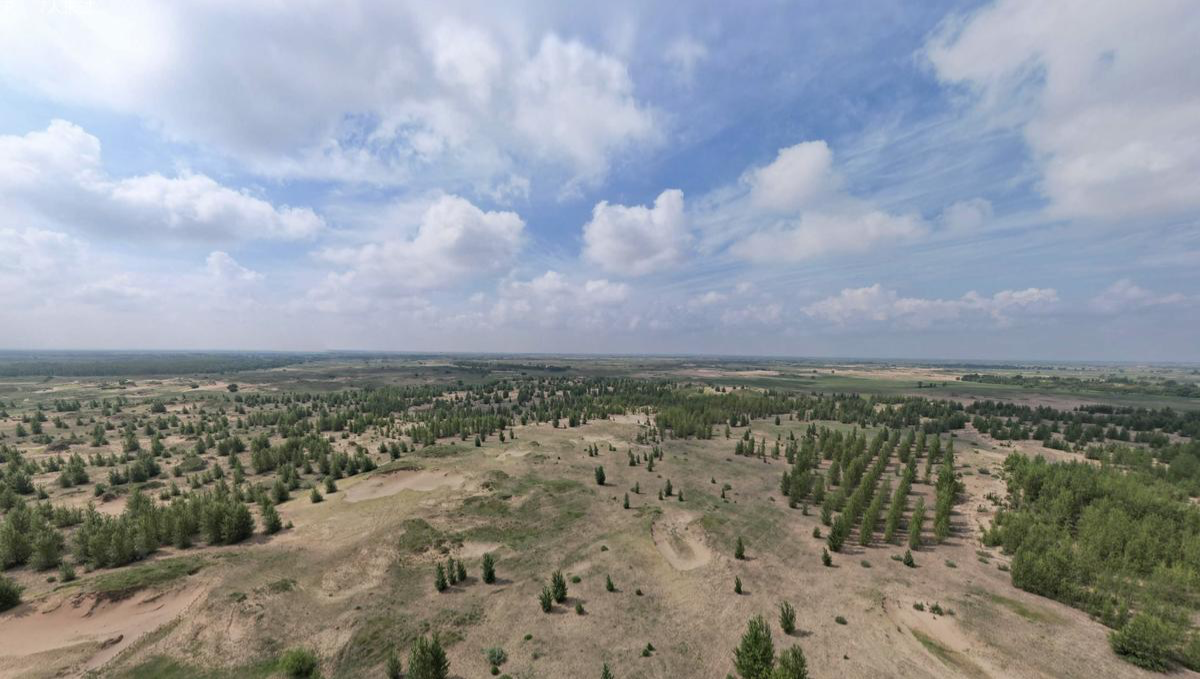
A combination of the climate change and land exploitationsuch as overgrazing and over-farming have degraded the land of Tongliao Municipality, Inner Mongolia, and the now desertified area is expanding at an astonishing rate. Sandstorms strike Inner Mongolia and its surrounding areas each spring, destroying local homes and forcing many people to flee their native land. This project will reforest the area in order to revitalize the land and block the sandstorms. In addition to the planting, community and education programs are implemented through our program to raise awareness and to support local communities, ensuring positive impacts and project sustainability.
With the generous support from everyone, MTP had successfully planted THREE million trees in 2024, covering Kulun Qi and Kezuohou Qi in Tongliao, Inner Mongolia. Significant impact is observed in terms of vegetation restoration and ecosystem reconstruction in the planted forest sites.
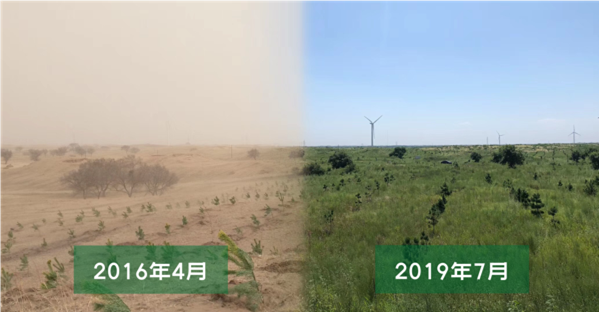
Forestsite in 2016(left) & 2019(Right)
Types of Trees Planted
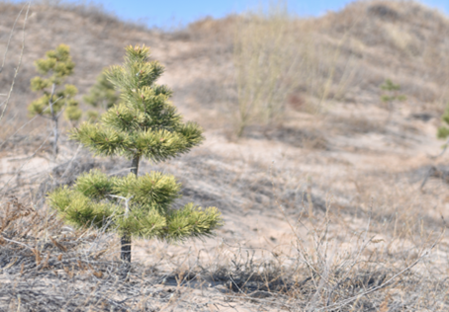
MTP primarily plant hybrid poplars (Populus simonii) and Mongolian Scots pine (Pinus sylvestnis var. mongolica Litv.), the locally-adapted species with a healthy survival rate, which are also effective at sequestering carbon. Local forestry experts have deemed the tree species suitable for local temperature and soil properties. In 2011, MTP started planting pine trees, which have strong roots, and are drought-tolerant, cold-resistant, and wind-resistant, contributing to fighting desertification in nearby areas. In 2012, poplars and pines were inter-planted to increase biodiversity, stabilize soil microbial community structure, and improve sustainability in the forest sites.
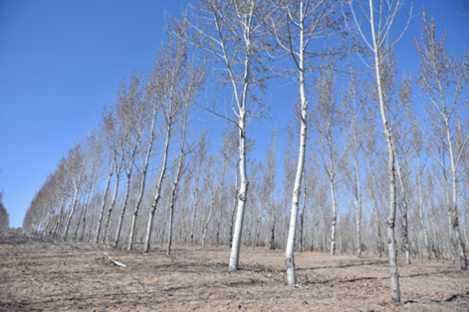
Hybrid poplars
Mongolian Scots pine
Maintaining and Monitoring the Trees
Local farmers and tree planters help plant, monitor, and maintain the trees growing on their land. The farmers are licensed to harvest the trees that have reached maturity, but only on the condition that they replant on the same plot. During the tree growth period, the development of understory economy in the forest is encouraged, such as planting pasture grass and Chinese medical herbs, for the farmers to earn extra income, while improving tree growth.
Roots& Shoots also recruits volunteers to help with forest ecological survey every year, getting them involved by studying ecology, measuring the growth of the trees, assessing the ecological impact of them, and helping to create a database for long-term project development.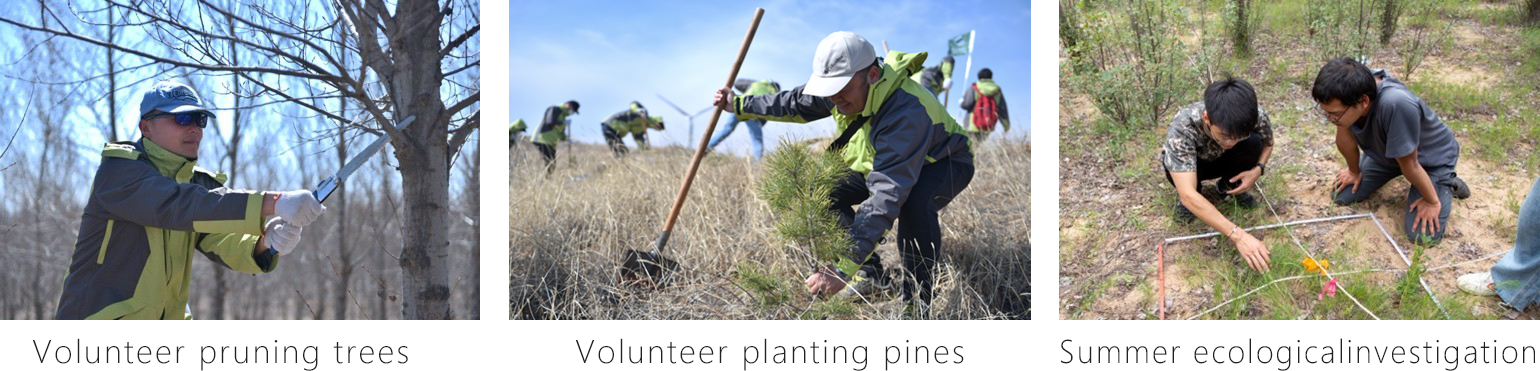
Technical ExpertiseShanghai Roots & Shoots cooperates with the Department of Forest Science’s Nursery Technology Cooperative at Oregon State University, USA. Our full-time forestry managers, with their academic background in forestry and agriculture, work on-site to evaluate how the trees are growing and to ensure continued success by assessing the technical aspects: soil evaluation, viability of the saplings, watering regimens, intercropping practices, and local community support. Regular observation and annual investigations are conducted by forestry managers to provide information and data for solid, reliable forest reports in a long term.
Get Involved
Donating one tree costs 25 RMB, including allexpenses needed throughout the tree’s life.The Gift that keeps giving; Plantinga tree in someone’s honor is a unique, thoughtful, and environmentally friendly gift for any festive occasion. Sponsor trees for the Million Tree Project as personal gifts for friends and family, or as corporate gifts for clients and staff.
Sponsor corporate forests; 2,000trees (50,000 RMB) make a healthy-sized forest. This sends employees and clients a strong message that your company cares about its environmental impact. With GPS technology, you will be able to view the exact location of your company’s forest!Carbon offset; Air travel emits hugeamounts of carbon dioxide and therefore contributes considerably to climate change. Determine your yearly carbon footprint and reduce it – better yet, completely offset it!
Planting trip in InnerMongolia; Every year, Shanghai Roots & Shoots staff,volunteers, and sponsors travel to Inner Mongolia to plant trees with local farmers. The trips are scheduled in April to coincide with the best poplar planting season and last 4 days and 3 nights, activities include tree planting, pruning and desert visiting. The trip is open only to a company donating a minimum of 2,000 trees (50,000 RMB), aschool group donating a minimum of 1,000 trees (25,000 RMB), and an individual donating a minimum of 500 trees (12,500 RMB). Participants must be 16 years of age or older.
Where we plant
Tongliao
Lying on the south part of Horqin Sandy Land, the municipality of Tongliao has a total area of 59,535 km2. It stretches 418km from north to south, and 370km from east to west. It’s within the coordinates of E 119°14′- E123°43 and N 42°15′- N45°59. The landscape and the climactic conditions of the area have played a pivotal role in the process of desertification. Both the north and south of Tongliao is higher, the middle part comparatively low, making this municipality seem like a horse saddle. The North part are hills with elevation 400-1300m, taking 22.8% of the total area of Tongliao. The South part are hills with an elevation of 550-730m, taking about 7.0% of the total area. The Middle is sandy alluvial plain with an elevation of 120-320m, taking 70.7% of the total area. Among these, there are zones of transition with rolling sand dunes and sandy lands, with elevations of 200-400m.
Classified as a Continental Steppe Climate (influenced by monsoons), Tongliao experiences four distinct seasons. Each spring the prefecture encounters very dry and cold conditions with heavy winds; and while the summers are much warmer, they are also very humid and short-lived. The annual average temperature of Tongliao is only 0-6°C and annual accumulated temperature of 3,000-3,200 °C, making life difficult for a primarily agricultural based economy, as they also only receive 140-160 frost-free days in the year. Despite the cold air, the area still receives a great deal of sun exposure. The accumulated hours of daylight throughout the year average 3,000 (compared to New York, USA which averages 2,207 hours). Tongliao only receives 340-400mm of rainfall per year, but evaporate five times the amount of rain that falls. Additionally, the average wind speed is 3-4.4 mi/second, and can reach a level 8 out of 12 or higher on the Beaufort scale, 20-30 days per year.

Hure Banner(库伦旗)
Hure Banner is in the southwest of Tongliao, to the east of the Horqin desert. Hure town, where the government is located, is 230 km away from Shenyang (our airport destination). It has a total area of 4,716 km2, of which about 20% is farmland. Of Hure’s 175,000 inhabitants, approximately 80% are farmers. The banner (Qi) consists of six towns (Sumu) and 186 villages (Gacha); they are home to eleven nationalities, with Mongolians accounting for the majority (56%) of the population.
In approximately 1632, Tibetan Buddhism arrived and the land was renamed Manjushi Li Hure Banner by the monks. Shortly thereafter in 1646, the Qing dynasty established themselves and ruled the area under a theocratic government for the next 285 years. In 1947, the people’s government of Hure Qi replaced the old system and continues till now.
Tourism in Hure Banner is very rich and full of national features. It is the birthplace of Andai Art, and has therefore been known as Inner Mongolia’s “banner of culture” since the 1960s. In 1996, Hure Banner was officially bestowed the title of “Town of Andai Art” by the Ministry of Culture. The dance performance, the Legend of Andai, was created by Mulanmuqi, and is now recognized as a new type of Korqin Monglian Drama. In 2005, Mongolian Andai Dance was among the first to be recognized on China’s list of Intangible Cultural Heritage items. Other points of interest in Hure include tombs and the Hei City ruins from the Liao Dynasty, and monasteries from the Qing Dynasty. The compound housing the Xingyuan Monastery, Fuyuan Monastery and Xiangjiao Monastery has been awarded as a provincial cultural relic protection unit.
Hure Banner is one of the poorest regions in Inner Mongolia. Its economic activities combine farming and controlled grazing. Throughout its history, traditional agriculture has played a leading role in the local economy while industry has been less significant. In the past few decades, the local income per capita and fiscal revenue has been comparatively low. In 1994, Hure Banner was designated as an impoverished area, and as a result, in 2002 the area was selected to be a key area for anti-poverty initiatives. In 2006, the average disposable income per capita among town residents was 7,755 RMB; the average net income of peasants and herdsmen was 2,890 RMB.
Horqin Left Wing Rear Banner(科尔沁左翼后旗)
Horqin Left Wing Rear Banner is in the south of Tongliao. In short, it is called Ke Zuo Hou Qi. Its neighbors include Shuangliao of Jijin Province in the northeast, Zhangwu, Kangping and Changtu of Liaoning Province in the east and south, Hure Banner, Naim Banner, Hure Town, Horqin District and Ke Zuo Zhong Qi in the east and north. Ke Zuo Hou Qi covers an area of 1,1476 km2, and has a population of 400,000 people (Year 2014). There are 24 towns in total.
Ke Zuo Hou Qi is in between the Horqin Sandy Land and Songliao Plain. Only 3% of the area is flood plain, located in the conjuncture of East Liao River and West Liao River. All the rest are landscape characterized by mixture of sand dunes and grasslands. The highest point is 308.4m and lowest point is 88.5m.
Ke Zuo Hou Qi is the hometown of the famous general in Qing Dynasty, Zenggelinqin. The most famous tourist sites include Da Qing Go, also known as the Pearl of Sandy Land, the Liao Tomb in Tuerji Moutain and Shuangheer Mountain in Agula Town.
Glossary
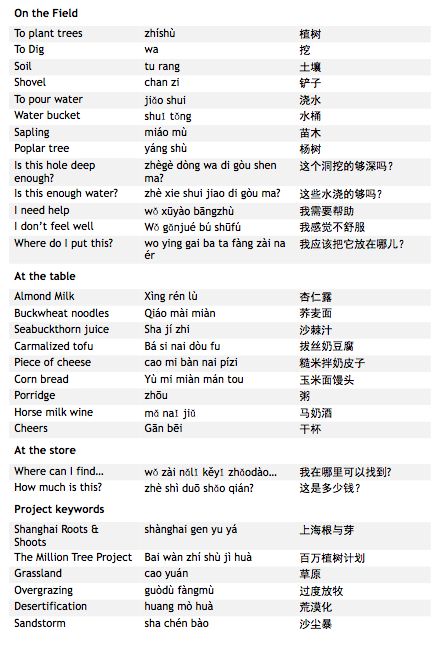
Below are some phrases that may be useful during the trip. Try practicing with a friend!